Gertrude Bell

From Oxford to Babylon

Archaeology and Intelligence in the Middle East
International Roundtable | September 18, 2026 - Florence, Italy

Introduction


One hundred years after her untimely death, Gertrude Bell is celebrated in her multifaceted character. 

Born in 1868, Gertrude Bell became one of the key figures in the Middle East: archaeologist and keen traveler, her interest in the history of Mesopotamia, and her uncanny ability of capturing the atmospheres of ancient ruins as well as of tribal societies, made her way through the office of Winston Churchill.

Gertrude Bell's reports and advice were instrumental for British politics in the Middle East, specifically for the determination of Iraq's boundaries.

Bell instituted the Archaeological Museum in Baghdad and promoted the first laws about the Cultural Heritage of the region.

The Roundtable aims to present the many cultural and political aspects of Bell's work, analyzing her publications and the projects that have been promoted throughout the century 1926-2026.


Information


International Roundtable

Gertrude Bell 
FROM OXFORD TO BABYLON

Archaeology and Intelligence in the Middle East  

September 18, 2026
Florence (Italy)


THE CONFERENCE IS ORGANIZED BY
CAMNES
(Center for Ancient Mediterranean and Near Eastern Studies)

______

SCIENTIFIC COORDINATION & ORGANIZATION (in alphabetic order)
Stefania Berutti (CAMNES)
Marina Lo Blundo (Parco Archeologico di Ostia Antica)
______
 
REGISTRATION
 
The workshop is free and open to all, and does not require any registration.


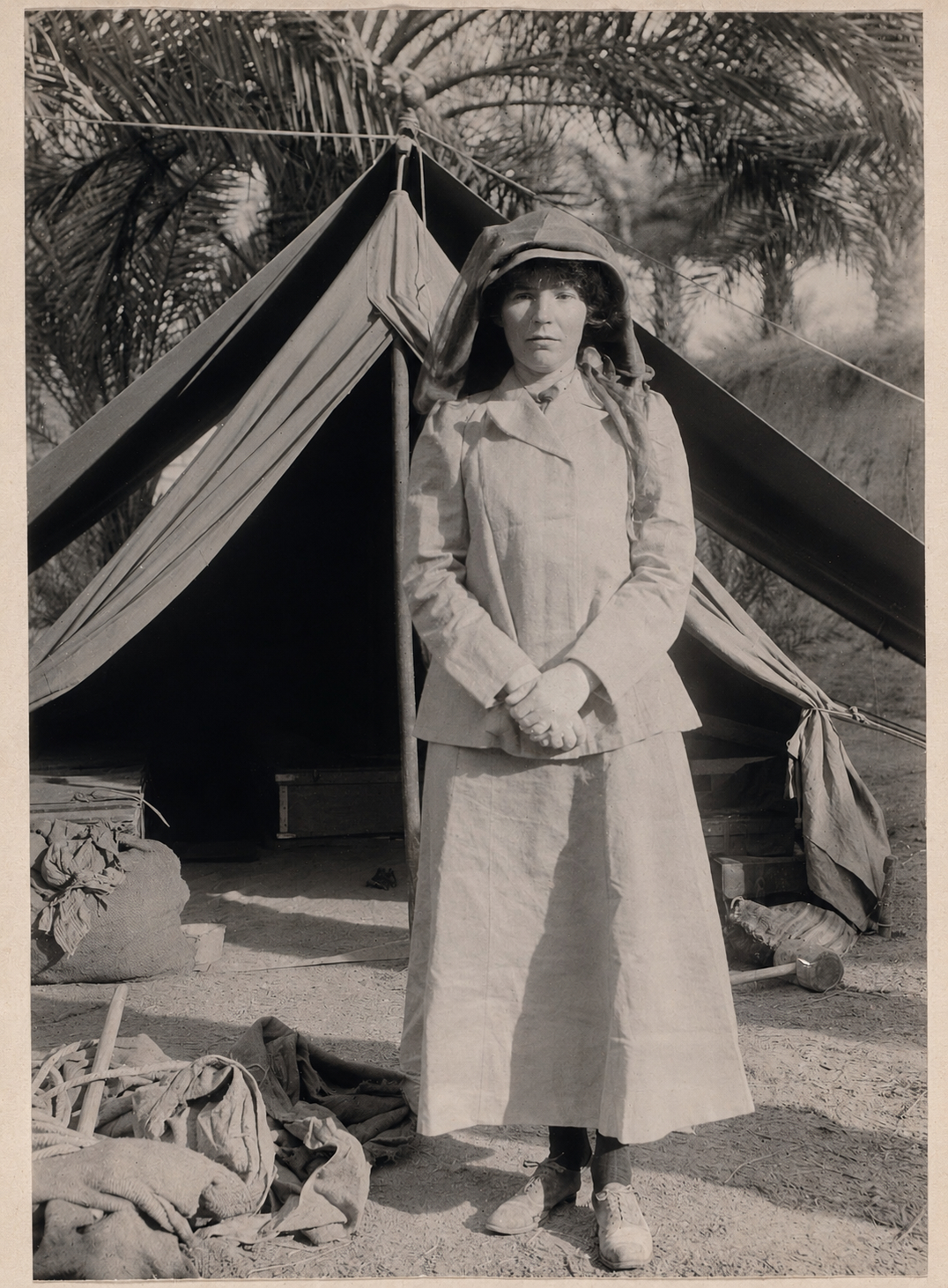
GB-PHOTO-2-k-218, Gertrude Bell Archive, Newcastle University Special Collections, GB 186.

Program Schedule

FRIDAY 18 SEPTEMBER 2026
10:00-10:30
 Opening Session
 
WELCOMING REMARKS
Guido Guarducci and Stefano Valentini (CAMNES)
INTRODUCTION
Marina Lo Blundo (Parco Archeologico di Ostia Antica) and Stefania Berutti (CAMNES) 
10:30-11:10

 Session 1: Becoming Gertrude Bell
chair: Marina Lo Blundo   
10:30-10:45
Valentina Flex 
(Newcastle Archive)
A World Recorded: Exploring the Archival Legacy of Gertrude Bell
10:45-11:00
Stefania Berutti 
(CAMNES)
"Lying in a hammock in a Persian garden". Gertrude Bell and the translation of Hafez's poems
11:00-11:10
Discussion
11:10-11:20 Coffee break
11:20-12:55

 Session 2: Gertrude Bell Archaeologist and Traveler
chair: Stefania Berutti  
11:20-11:35
Ilaria Puri Purini 
(American Academy in Rome)
The Roman Spring of Gertrude Bell: Images and Emancipation
11:35-11:50
Marina Lo Blundo 
(Parco Archeologico di Ostia Antica)
"I have strung their words upon the thread of the road": Gertrude Bell traveller and travel writer
11:50-12:05
Joan Porter MacIver 
(BISI)
Gertrude Bell and the Iraq Museum inspired by the research of Dr Lamia Al-Gailani Werr (1938-2019)
12:05-12:35
Ilaria Bucci (Durham University) and Enrico Foietta (University of Torino)
"Like an acanthus capital in a nightmare": The sculpture of Hatra from Gertrude Bell to the Hatra Statuary Salvage Project (Iraq Museum)
12:35-12:55
Discussion
13:00-14.00 Lunch break
14:00-15:15

 Session 3: A Legacy
chair: Valentina Flex  
14:00-14:15
Alesia Koush 
(CAMNES - UNESCO Chair in Illicit Trafficking in Cultural Property and Cultural Rights, University of Siena)
Legislative legacy of Gertrude Bell: from 1924 Iraqi Antiquities Law till today
14:15-14:30
Noorah Al-Gailani 
(BISI)
One Baghdadi family's lore about Miss Bell and how the Gertrude Bell archive has been a source for family history
14:30-14:45
Rosalind Wade Haddon 
(BISI)
Gertrude Bell's unfinished guide to Baghdad and Mosul's historic monuments
14:45-15:15
Discussion
15:15-15:30  Concluding remarks 
END OF THE ROUNDTABLE

Abstracts


Noorah Al-Gailani
BISI
 
One Baghdadi family's lore about Miss Bell and how the Gertrude Bell archive has been a source for family history

This presentation will briefly explore Miss Bell's interactions with a few of the men in the Gailani family in Baghdad. This contact produced tales that have been passed down as family lore. In her letters and diary entries, Miss Bell mentions some of the Gailani men she met, which has shone a light on these men's activities and dealings in public life beyond their familial circle. Both Gailani family lore and Miss Bell's writings reveal perceptions and misperceptions about each other, as well as about social life in a society transitioning from Ottoman times to the newly established Iraq.
 

Stefania Berutti
CAMNES
 
"Lying in a hammock in a Persian garden". Gertrude Bell and the translation of Hafez's poems
 
Gertrude Bell arrived in Teheran in the spring of 1892 to stay with her uncle Frank Lascelles, the British Minister in Persia, and his wife, sister of Bell's stepmother. Within five years, Bell had taken Persian lessons and produced one of the most highly regarded English translations of Hafez's poetry. The presentation will try to delineate Bell's approach to the study of Persian culture and how it stands out from the British tradition of the Orientalists. It will also be a way to describe Bell's first look to that part of the world that would become her home.


Ilaria Bucci and Enrico Foietta
Durham University and University of Torino
 
"Like an acanthus capital in a nightmare": The sculpture of Hatra from Gertrude Bell to the Hatra Statuary Salvage Project (Iraq Museum)
 
Gertrude Bell's visits to Hatra in 1911 and 1922 were foundational moments in the site's early exploration. This paper presents the Hatra Statuary Salvage Project (HaSSP), a CAMNES-SBAH collaboration that catalogued more than 200 sculptures in the Iraq Museum storerooms across two seasons (2019-2020, 2023). Combining documentation, conservation, and archaeological and epigraphic analysis, the paper aims to reframe these objects' material and visual histories, placing Bell's work in dialogue with contemporary archaeological and preservation practices.


Valentina Flex
Newcastle Archive
 
A World Recorded: Exploring the Archival Legacy of Gertrude Bell
 
The Gertrude Bell Archive, held at Newcastle University Special Collections, is a UNESCO Memory of the World registered collection wich spans over fifty years and comprises letters, diaries, photographs and writings created by Gertrude Bell. It is complemented by the personal and working library owned, used, and often annotated by Gertrude, known as the Gertrude Bell Book Collection. Using highlights from this rich resource of original material, the presentation will consider Bell through an archival lens, exploring the ways in which her life and work can be interpreted and understood through her documentary legacy.


Alesia Koush
CAMNES - UNESCO Chair in Illicit Trafficking in Cultural Property and Cultural Rights, University of Siena, Italy
 
Legislative legacy of Gertrude Bell: From 1924 Iraqi Antiquities Law till today
 
This presentation contextualises the legislative legacy of Gertrude Bell within a wider historical, political and cultural frame, starting from the 1924 Iraqi Atiquities Law and the resistance it faced on behalf of Iraqi politicians, proceedings with the Iraqi Antiquities Law N. 59 of 1936 enacted immediately after the Iraqi independence and facing opposition, this time, from the British archaeological establishment, and arriving up to the Antiquities and Heritage Law No. 55 of 2002 and the most recent announcement by the Iraqi Government seeing the country embarking on Retrieve Dipolomacy aimed at the repatriation of Iraq's invaluable cultural heritage to its rightful place of belonging.


Marina Lo Blundo
Parco Archeologico di Ostia Antica
 
"I have strung their words upon the thread of the road": Gertrude Bell traveller and travel writer
 
Gertrude Bell is the author of more than one travelogue. Alongside her best-known work, "The Desert and the Sown", Bell published other autobiographical travelogues that reveal her keen eye not only for places, but also for local people and communities. This article aims to provide an overview of Bell as a travel writer, examining even her lesser-known works, in order to portray her as a curious, enterprising traveller who respected local traditions and took care to record details and anecdotes.


Joan Porter MacIver
BISI
 
Gertrude Bell and the Iraq Museum inspired by the research of Dr Lamia Al-Gailani Werr (1938-2019)
 
Many books have been written about Gertrude Bell and her political involvements and travels but less is known of her time at the Iraq Museum. The late Dr Lamia Al-Gailani Werr spent time in the archives of the Iraq Museum intending to write a book on the last few years of her life. This paper will draw from her research and Gertrude Bell's own writings to assemble a fuller understanding of her time as Honorary Director of Antiquities and as founder of the Iraq Museum.


Ilaria Puri Purini
American Academy in Rome
 
The Roman Spring of Gertrude Bell: Images and Emancipation

Gertrude Bell was in Rome in the spring of 1910, before continuing her travels along the Dalmatian coast. During her stay, she met scholars, aristocrats, photographers, and archaeologists. My talk will focus on her photography from this period, comparing it to images by her contemporaries, such as Esther Van Deman and Maria Pasolini Ponti. Read alongside her dense writings, these photographs reveal an interest in archaeological discoveries and ancient construction techniques, and they show how she used photography not only as documentation but also as a tool for feminist emancipation.


Rosalind Wade Haddon
BISI
 
Gertrude Bell's unfinished guide to Baghdad and Mosul's historic monuments
 
This talk will focus on Baghdad's historic medieval monuments, a topic close to Miss Bell's heart. Her aim was to educate and inform the visitor to this once golden capital. Unfortunately all that is left to us today is a typescript in the Newcastle University archives.



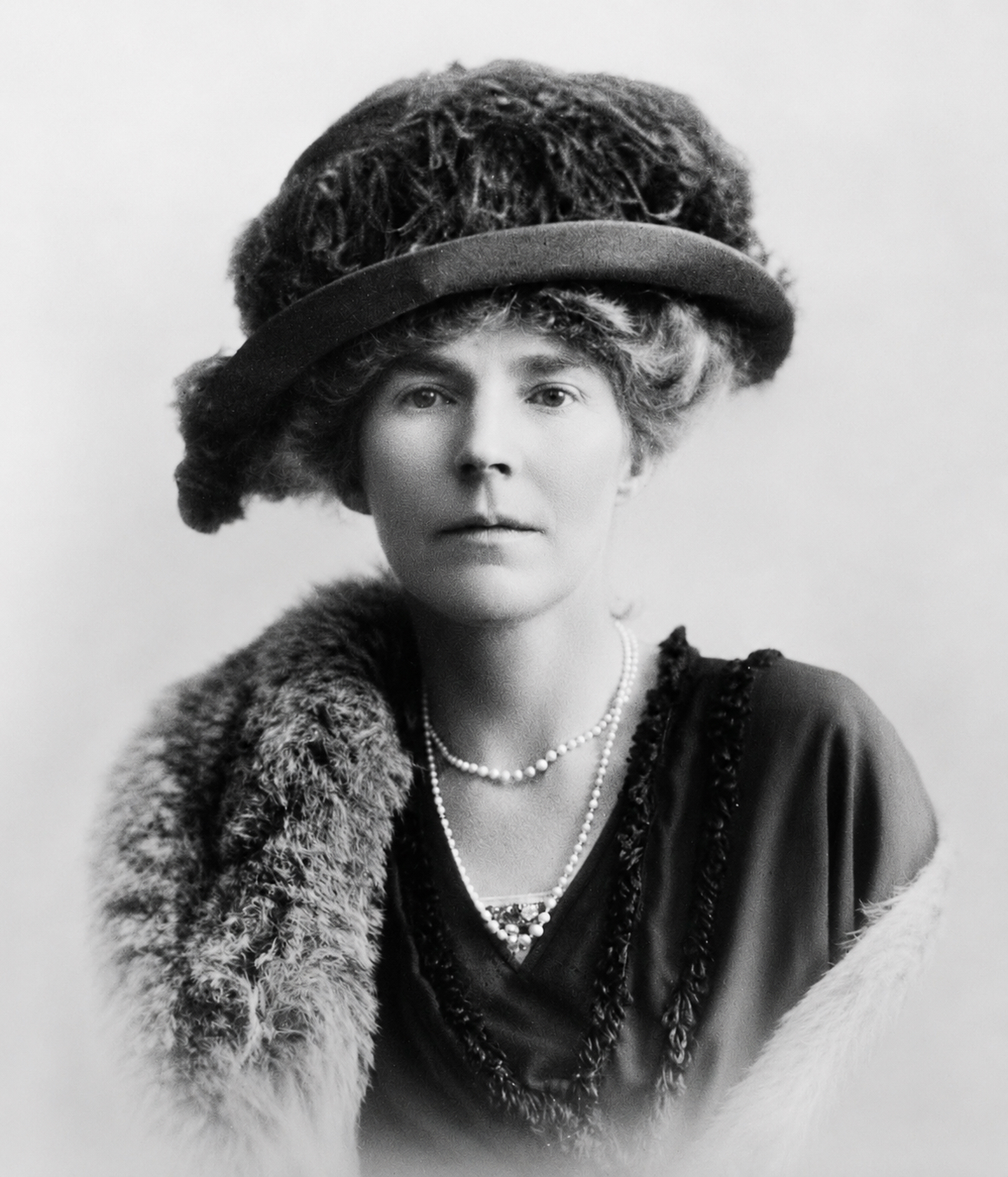
GB-PERS-2-B-004B, Gertrude Bell Archive, Newcastle University Special Collections, GB 186.

Bios


Noorah Al-Gailani
BISI
 
Dr. Noorah Al-Gailani is Curator of Islamic Collections (Arab World) at the British Museum and a member of council at the British Institute for the Study of Iraq. Over the past fifteen years she has been gathering her own family's stories, expecially those that tell of Baghdad's societal interactions, adaptation and coping with change.
 

Stefania Berutti
CAMNES
 
Stefania Berutti is an archaeologist based in Florence. She holds a Professional Doctorate from the Italian Archaeological School in Athens and her research focuses on various themes of Ancient Greek Religion. She collaborated with Archaeological Museums in Tuscany and Sicily, and she is currently teaching Classical Mythology and Mystery Cults of the Ancient Mediterranean at the LdM-CAMNES and at Syracuse Florence.


Ilaria Bucci and Enrico Foietta
Durham University and University of Torino
 
Ilaria Bucci is a Leverhulme Early Career Fellow and lecturer at Durham University. An archaeologist of West Asia, she specialises in graffiti and visual culture from Hellenism to Late Antiquity, with a focus on archaeological archives and museum collections. Her research includes extensive work on Hatra, Palmyra, and Dura-Europos, carried out in collaboration with the University of Torino, UrbNet (Aarhus), and the project International (Digital) Dura-Europos Archive (Yale-Bard). She is Co-Deputy Director of the Hatra Statuary Salvage Project (HaSSP) at the Iraq Museum.

Enrico Foietta is a Fixed-term Assistant Professor at the University of Torino. He has over a decade of experience collaborating with CRAST and is actively involved in several archaeological projects in Iraq, including Seleucia on the Tigris (UniTO-CRAST), Assur (LMU), Hatra (ISMEO-University of Padova), and the Hatra Statuary Salvage Project (HaSSP) at the Iraq Museum in Baghdad, where he serves as Co-Deputy Director. A member of the editorial board of Parthica, his research focuses on the architecture, material culture, and landscapes of the Hellenistic and Parthian worlds.


Valentina Flex
Newcastle Archive
 
Valentina Flex is the Gertrude Bell Project Archivist at Newcastle University Special Collections. She has worked with the Gertrude Bell Archive for nearly five years, cataloguing and improving its discoverability, as well as creating a geographical web resource displaying Bell's archive spatially on a map. Valentina has also curated several exhibitions about Bell, most recently "Routes, Ruins and Reconnaissance", held at the Royal Geographical Society in London and focusing on Bell's archaeological, geographical and intelligence work prior to, during and after WWI.


Alesia Koush
CAMNES - UNESCO Chair in Illicit Trafficking in Cultural Property and Cultural Rights, University of Siena, Italy
 
Alesia Koush holds the UNESCO Chair in Illicit Trafficking of Cultural Property and Cultural Rights at the University of Siena and is a researcher with CAMNES since 2016, currently leading its participatory rights-based public archaeology projects in Tuscania, Italy, and Erbil, Iraq. Alesia earned her PhD in Archaeology at the University of Reading, UK, on "Human rights implications of illicit trafficking in cultural property: a case study in Iraq", she extensively teaches in various educational institutions and conducts research on developing the human rights-based approach to the illicit trafficking in cultural property.


Marina Lo Blundo
Parco Archeologico di Ostia Antica
 
Marina Lo Blundo is an archaeologist at the Ostia Antica Archaeological Park (Italian Ministry of Culture), and archaeology blogger and a travel blogger. She is the editor of the book "Femicide and Gender-Based Violence in Ancient Rome" (2024). For the Ostia Antica Archaeological Park, she is the scientific curator of the Archaeological Area of the Ports of Claudius and Trajan (Fiumicino) and of the Photographic Archive, as well as head of the Park's Communications Office.


Joan Porter MacIver
BISI
 
Joan Porter MacIver was the conference organiser of the 2013 "Gertrude Bell and Iraq - A Life and Legacy" joint BISI British Academy conference. She is a long-serving Council Member of the British Institute of the Study of Iraq (BISI) (The Gertrude Bell Memorial), previously known as the British School of Archaeology in Iraq founded in 1932. Ms Porter MacIver was the Project Coordinator for the Culture Protection Fund (CPF) grant to complete the new museum in Basra and the founding Executive Director of the Honor Frost Foundation.


Ilaria Puri Purini
American Academy in Rome
 
Dr. Ilaria Puri Purini is a curator and an art historian working on the early 20th century. She is currently at the Andrew Heiskell Arts Director at the American Academy in Rome. Previously she held curatorial positions at the Contemporary Art Society and the Victoria & Albert Museum in London.


Rosalind Wade Haddon
BISI
 
Dr Rosalind Wade Haddon is currently Chair of the British Institute for the Study of Iraq's Council of Trustees and Research Associate in the School of Arts, SOAS, University of London. Her own research interests centre on the archaeology, architecture and material culture of Iraq, Syria, the Levant, Egypt, Yemen and Iran focusing on the 9th to the 14th centuries CE.


Roundtable venue (CAMNES-Lorenzo de' Medici)

Ex-Church of S. Jacopo - Via Faenza, 43 - Florence (Italy)


Copyright © 2010-2026 CAMNES. Tutti i diritti riservati  |  

Privacy Policy  |  

Cookie Policy